


Hail Damage Roof Repair in Houston: A Homeowner's Step-by-Step
This step-by-step guide helps Houston homeowners navigate hail damage roof repair correctly, from post-storm documentation through contractor selection and insurance claims.


A hail storm hit. Now what? Hail damage roof repair in Houston is not just about getting shingles replaced. It is about protecting your property, navigating an insurance claim correctly, and choosing a contractor who will still be accountable two years from now. Here is exactly how to do it right, in the right order.
How Bad Is Houston's Hail Problem?
Houston sits in one of the most active hail corridors in the United States. The I-45 corridor from Conroe through Houston down to Pearland sees multiple significant hail events every year, with hailstones reaching 2 inches or larger in the most severe cells. The July 2024 Hurricane Beryl event delivered combined wind and hail damage resulting in an estimated $2.5 billion to $4.5 billion in Harris County property damage, with residential roofing representing a substantial portion of those totals.
Houston's geography means that even neighborhoods not directly under the most severe storm cell often receive significant hail that causes functional roof damage across a wide radius. If you had a documented hail event in your ZIP code, assume your roof was affected until a professional inspection confirms otherwise. Do not rely on a visual check from the driveway.
Step 1: Do Not Climb. Document From the Ground.
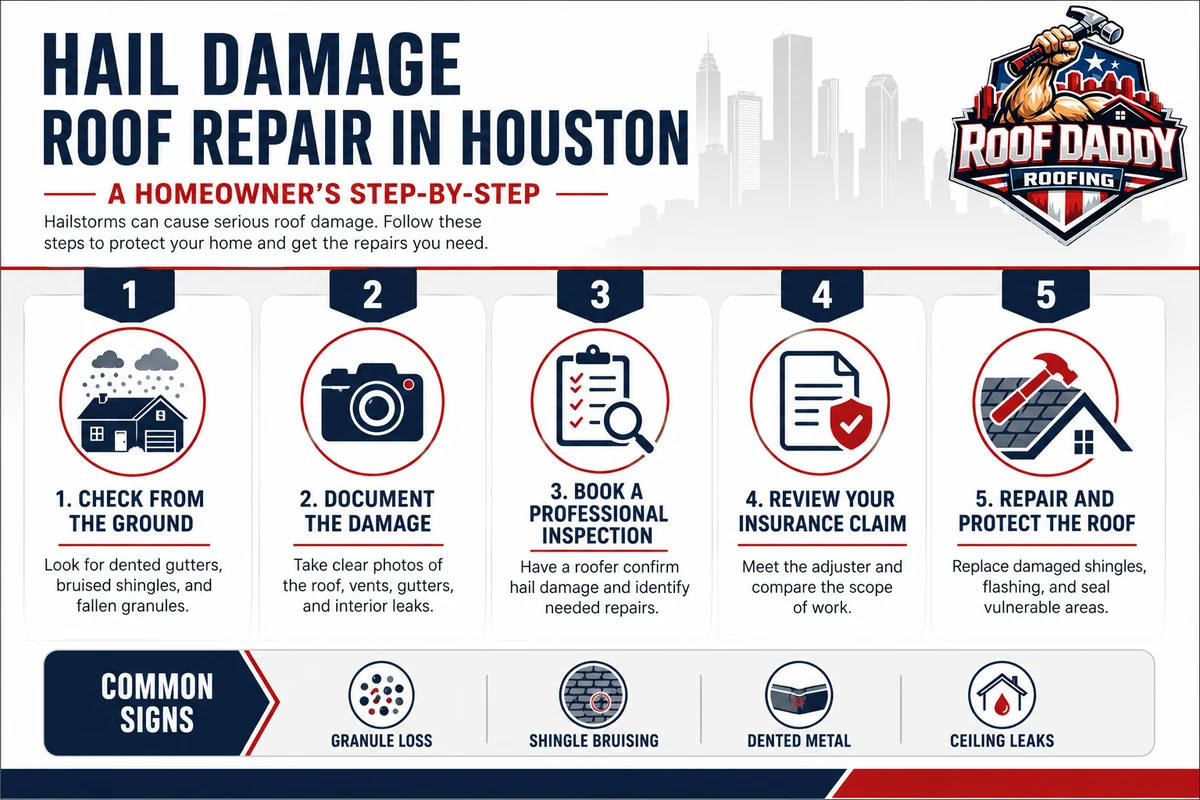
Your first instinct after a storm might be to grab a ladder and look for yourself. Resist it. Wet shingles are slippery. Hail-damaged shingles may have compromised structural integrity. And anything you damage personally while attempting an inspection can complicate your insurance claim by introducing questions about cause.
Instead, walk your property perimeter and do the following. Check your gutters for a significant accumulation of granules. Inspect your aluminum window screens, AC condenser fins, and any painted metal surfaces like mailboxes or exterior light fixtures for visible dents. These ground-level indicators confirm hail impact without requiring roof access. Take photos of everything with your phone, with timestamps enabled in your camera settings.
Step 2: Get a Professional Inspection Before Calling Your Insurer
This sequence surprises many homeowners, but it is one of the most consequential decisions in the entire process. You need your own independent documentation before your insurance adjuster arrives. If you call your insurer first and their adjuster comes out alone, their report becomes the primary record of what damage exists and what it is worth.
Roof Daddy provides a free post-storm inspection with a written report and photographs. Our documented findings give you a baseline record you control from the start. Once you have that report, you are filing your claim with evidence rather than just hoping the adjuster finds everything that was actually damaged. Visit our storm response page to request an inspection for your address across the Greater Houston area.
Step 3: File Your Claim with Complete Documentation
Under the Texas Prompt Payment of Claims Act, your insurance company must acknowledge receipt of your claim within 15 days and accept or deny it within 15 business days after receiving all required documentation. Payment must follow within 5 business days of acceptance. Knowing these timelines helps you track whether your insurer is complying with state law.
When you file, submit your own inspection report and photos, the date-stamped weather service record for the specific storm event, and photos of secondary damage indicators such as dented gutters and AC condenser fins. Request that an adjuster visit be scheduled promptly and ask Roof Daddy to be present during that visit. Our insurance claims support service is free and ensures the adjuster's report captures all functional damage, not just the damage visible from a quick walkthrough.
Step 4: Understand the Repair vs. Replace Decision
Not every hail event requires a full replacement. Isolated damage on an otherwise sound roof less than 10 years old may justify targeted repairs. However, most Houston hail storms producing hailstones larger than 1 inch cause damage distributed across the entire exposed roof surface, not concentrated in one section.
If more than 30 percent of your shingle surface shows functional damage (exposed mat, cracked tabs, failed adhesive seals), replacement typically makes more financial sense than repair. A patch job on a heavily damaged roof often leaves you one storm away from the same conversation at a higher cost because the remaining undamaged shingles have been weakened by the same hail event.
Roof Daddy's storm damage repairs start from $2,500. Full replacements start from $8,000 with a typical Houston range of $8,000 to $20,000. Compare that to competitors whose storm damage work typically starts from $3,500 and full replacements from $12,000. A free assessment gives you a specific number for your home.
Step 5: Choose a Local Contractor, Not a Storm Chaser
After every major Houston hail event, out-of-state contractors flood the area offering quick inspections and fast project starts. These storm chasers are often licensed in other states rather than Texas, carry inadequate insurance, and leave the area within months of completing work. When their installation fails, there is no one left to call.
Protect yourself with these screening steps before signing anything
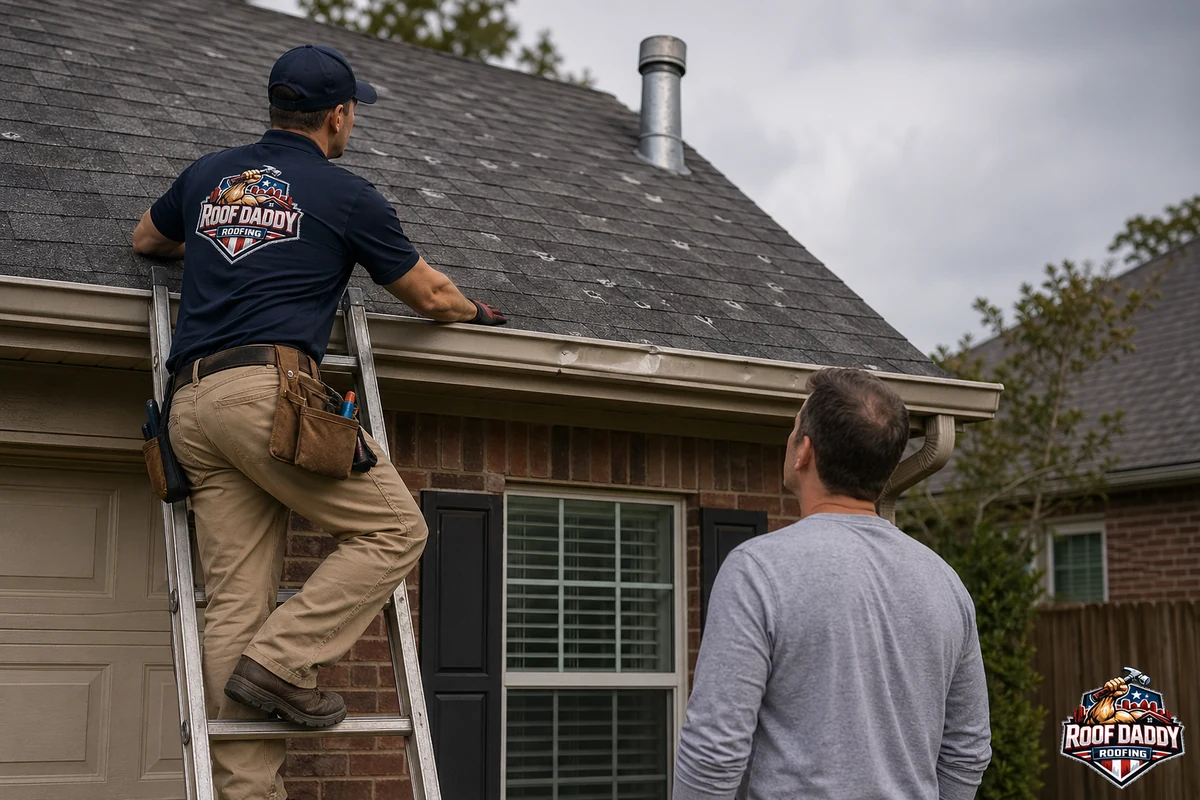
Roof Daddy is based in the Greater Houston area and has served homeowners across the metro from Katy to Humble to Conroe. We do not chase storms. We live here and have long-term accountability to this community.
Step 6: Consider the Class 4 Shingle Upgrade
When replacing a hail-damaged roof, the replacement event is the most cost-effective time to upgrade to Class 4 impact-resistant shingles. The incremental material cost is modest compared to a full replacement, and the long-term benefits for a Houston home are substantial.
Class 4 shingles meet the UL 2218 impact resistance standard and are built for Houston's hail environment. Many Houston-area insurers offer premium discounts of 15 to 30 percent for homes with Class 4 roofing, which typically offsets the price premium within 3 to 5 years. Also worth knowing: under Texas Property Code Section 202.011, your HOA cannot prohibit you from installing impact-resistant shingles that meet aesthetic and durability standards, even if they differ from the neighborhood's original material specification.
What Does the Repair Timeline Look Like?
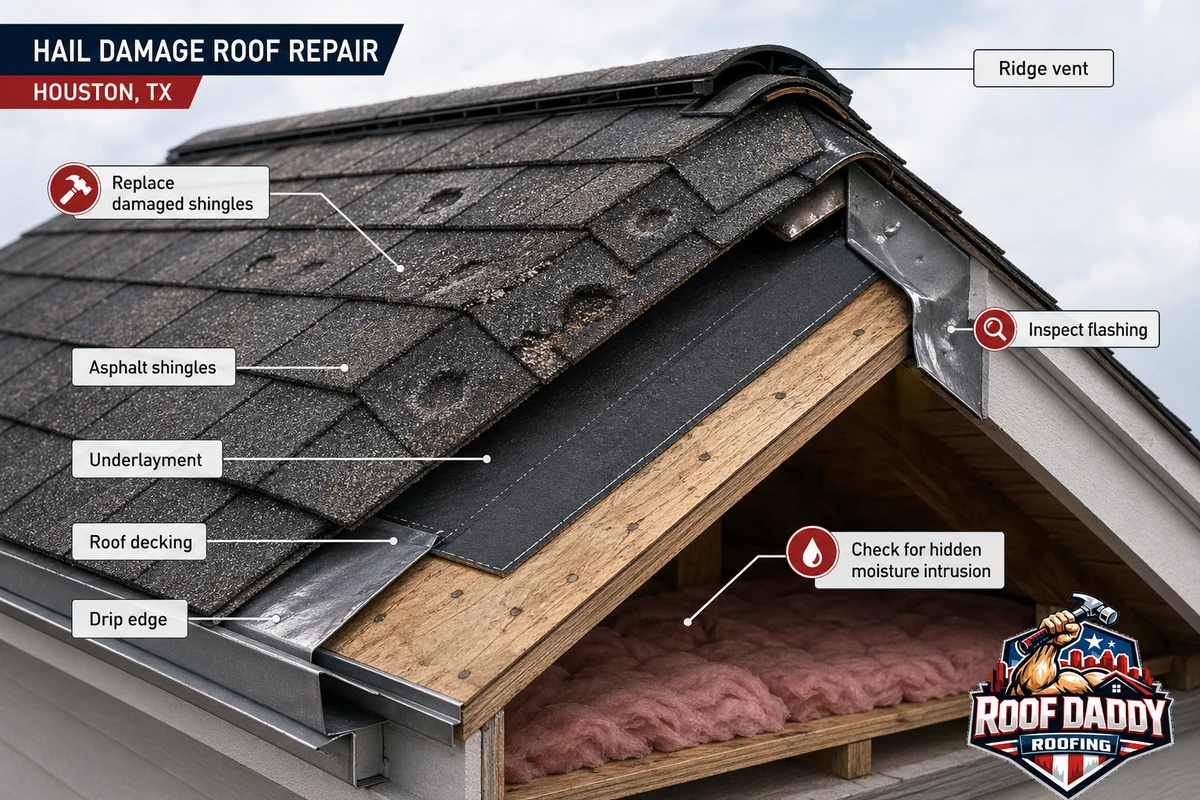
A typical Houston hail damage repair or replacement follows this sequence after your claim is approved: materials ordered (2 to 5 business days from approval), crew scheduled (1 to 3 business days after material arrival), installation completed in 1 day for most single-story residential roofs, and final inspection plus permit closeout within 1 week of installation completion.
Permits are required for re-roofing projects in Houston under the Houston Permitting Center regulations. Roof Daddy pulls the permit for you as part of every replacement project. You do not need to manage the permitting process or make trips to city offices.
For the complete visual guide to identifying hail damage on your specific roofing material before you call, read our post on what hail damage looks like on a roof. And when you are ready to start the repair process, our 24-hour leak response and repair team is ready to schedule your assessment.
Acting quickly after a Houston hail event is the single most important thing you can do to protect your claim and your home. The steps above, taken in order, give you the best possible outcome regardless of the severity of the storm. Roof Daddy serves homeowners across the entire Greater Houston metro and is ready to support you from first inspection through final permit sign-off.
Roofing Contractors in Houston TX You Can Count On



Roofing Contractors in Houston TX You Can Count On
Houston
Houston's trusted roofing experts. From storm damage repair to full roof replacements, we deliver professional roofing services built to handle the Gulf Coast climate across every Houston neighborhood.