

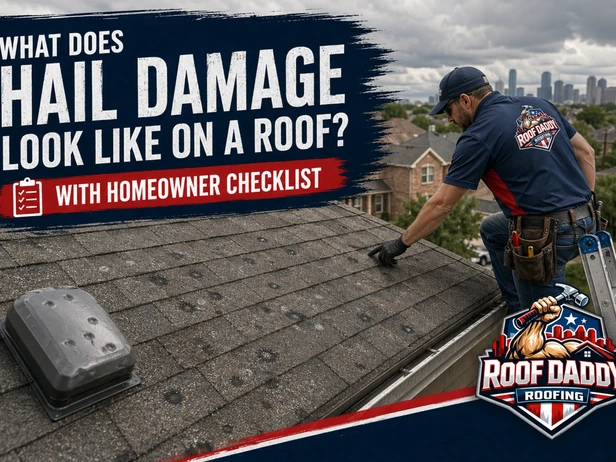
What Does Hail Damage Look Like on a Roof? (With Checklist)
This guide shows Houston homeowners exactly what hail damage looks like on different roof materials and how to distinguish it from normal wear and blistering.


Most Houston homeowners never get on their roof after a storm, and that is the right call for safety. But understanding what hail damage looks like on a roof helps you know what to ask an inspector, what to look for from the ground, and how to document your findings before an insurance adjuster arrives.
What Does Hail Damage Look Like on Asphalt Shingles?
On asphalt shingles, hail impact leaves a distinctive mark that differs from normal aging in four key ways. First, you will see round or irregularly shaped dark spots where granules have been knocked off and the black asphalt mat beneath is exposed. These spots have soft, bruised edges rather than the clean, sharp edges of a manufacturing defect or thermal crack.
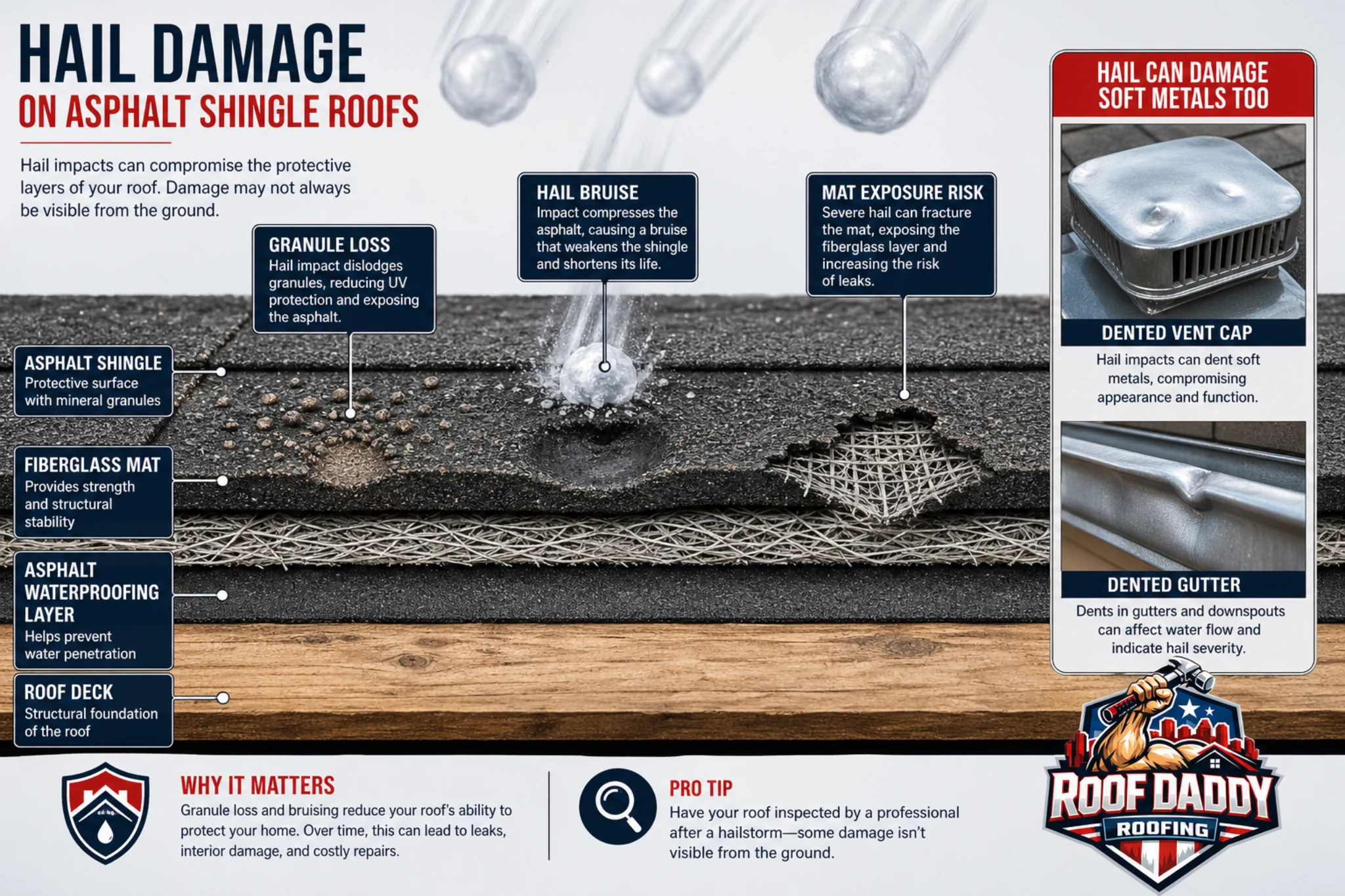
Second, the exposed mat area will feel soft and spongy when pressed, like a bruise on a piece of fruit. This is the fiberglass mat beneath the asphalt being compressed by the impact energy. Third, in severe impacts you will see actual fractures or splits running through the shingle surface. Fourth, hail creates a random, scattered pattern across the roof rather than the linear patterns of thermal cracking or the localized clusters typical of foot traffic damage.
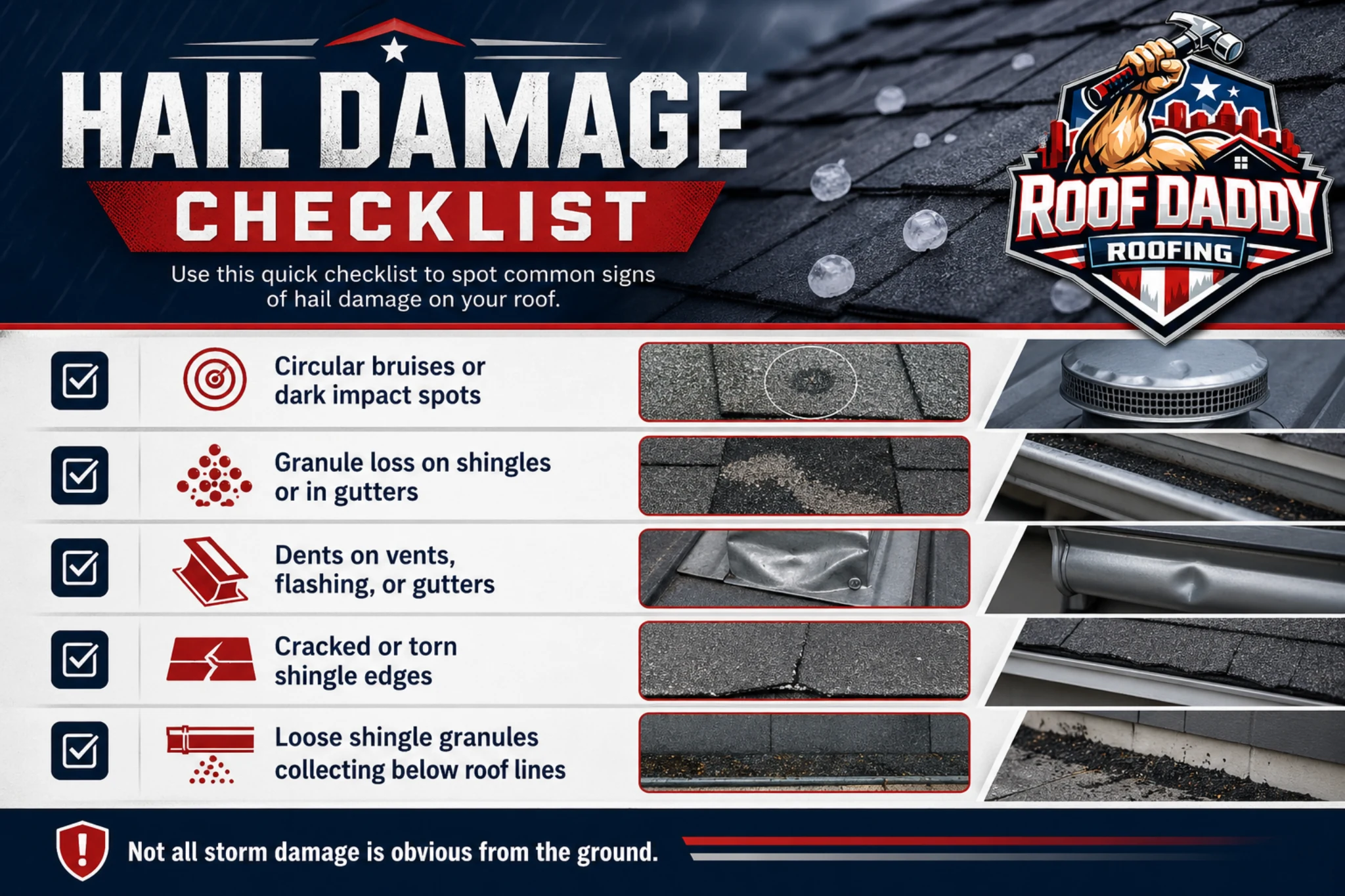
Quick Hail Damage Checklist for Asphalt Roofs
What Does Hail Damage Look Like on Metal Roofs?
Metal roofing handles hail better than asphalt but is not immune. On standing-seam metal panels, hail impact leaves visible dents in the flat pan area of the panel. These dents do not compromise the panel's weather-sealing ability in most cases, but they can affect your insurance claim valuation for cosmetic damage depending on your policy terms.
On exposed-fastener metal roofing, the more serious concern is fastener seal integrity. Hail impact near fastener locations can crack the rubber gasket beneath the screw head, which creates a future leak point that is invisible from the ground. A thorough inspection of exposed-fastener systems after any significant hail event is worth scheduling even when the panels appear intact from the street.
What Does Hail Damage Look Like on Tile Roofs?
Concrete and clay tile is brittle under impact. Large hail of 1.5 inches or larger will crack, chip, or fracture tile directly. Smaller hail may not crack tile visibly but can crack the underlayment beneath by transmitting impact force through the tile body without leaving obvious surface evidence.
From the ground, look for obvious cracks running across tile faces or missing tile fragments in the yard or gutters. If you find tile debris on the ground and there was no prior evidence of cracked tiles, hail is the likely cause. An inspector can probe beneath intact tiles for underlayment damage that the tile surface fully conceals, which is a critical step often missed in a quick visual assessment.
Hail Damage vs. Blistering: How to Tell Them Apart
This is the most common source of confusion for homeowners and for some insurance adjusters. Blistering looks similar to hail damage at first glance: dark spots, missing granules, and a depressed surface. But the cause and the claim implications are completely different.
Blistering is caused by heat and manufacturing or installation defects that trap volatile gases in the asphalt. When those gases escape, they create a raised bubble that eventually pops and leaves a crater-like spot. The key differences from hail damage: blistering spots are typically perfectly circular and symmetrical, the edges are clean and sharp rather than soft and bruised, the spot pattern tends to cluster near the ridge where heat is highest, and the pattern appears uniformly across all roof sections regardless of wind direction during the storm.
Hail, by contrast, concentrates on the wind-facing slopes. The upwind face of your roof will show significantly more damage than the downwind face, and the granule loss at impact points will have the soft, irregular margin of an energy-absorbing bruise rather than a clean-edged blister pop. The distinction matters directly for your insurance claim outcome.

Does Cosmetic Hail Damage Count for an Insurance Claim?
It depends on your policy language and the functional impact of the damage. Purely cosmetic hail damage, such as small dents in metal panels with no sealing loss, may not meet the threshold for a full replacement claim under all policies. Functional damage, meaning damage that compromises the roof's ability to shed water, almost always qualifies.
Texas law provides important protection here. Under Texas Department of Insurance guidance, insurers must base their assessment on actual documented damage rather than a blanket depreciation approach. If you believe your adjuster is undercounting functional damage, requesting a re-inspection or bringing in a public adjuster is a legitimate and often effective option. Our insurance claims support team can attend the adjuster visit with you and provide independent documentation to support your claim at no charge. You can also explore our broader Houston roofing services to understand the full scope of what we handle from inspection through replacement.
What Class 4 Shingles Look Like After a Hail Event
Class 4 impact-resistant shingles meet the UL 2218 standard, which involves dropping 2-inch steel balls from up to 20 feet. These shingles are specifically engineered to absorb the energy of hail impact without cracking or losing granules at the impact point.
After a storm that would leave obvious bruising on standard architectural shingles, Class 4 shingles typically show minimal or no visible damage. If you currently have standard shingles and are replacing a storm-damaged roof, upgrading to Class 4 can earn you a meaningful discount on homeowners insurance premiums and dramatically extends the roof's resilience through Houston's active hail season. Many Houston-area insurers offer discounts of 15 to 30 percent for Class 4 roofing, which offsets the modest premium over standard shingles within a few years.
Why Timing Matters After a Houston Hail Event
Houston hail events can affect hundreds of square miles simultaneously. In the days after a major storm, local roofing contractors fill up quickly with inspections and repair commitments. The homeowners who act within the first 72 hours get earlier scheduling windows and have damage that is still clearly attributable to the storm event rather than compounded by subsequent weather.
Insurance claim documentation is also stronger when the inspection happens close in time to the storm. Adjusters and inspectors can correlate what they see on the roof with the storm record more directly. Waiting two to three weeks introduces the possibility that a second rain event has moved granules in gutters, washed away surface evidence, or added secondary damage that complicates the original claim.
Houston's hail activity is consistently elevated compared to most U.S. metro areas. Getting into a routine of scheduling an inspection within a week of any reported hail event in your area is a habit that protects your claim rights and your roof investment over the long term.
What to Do Right After a Hail Storm
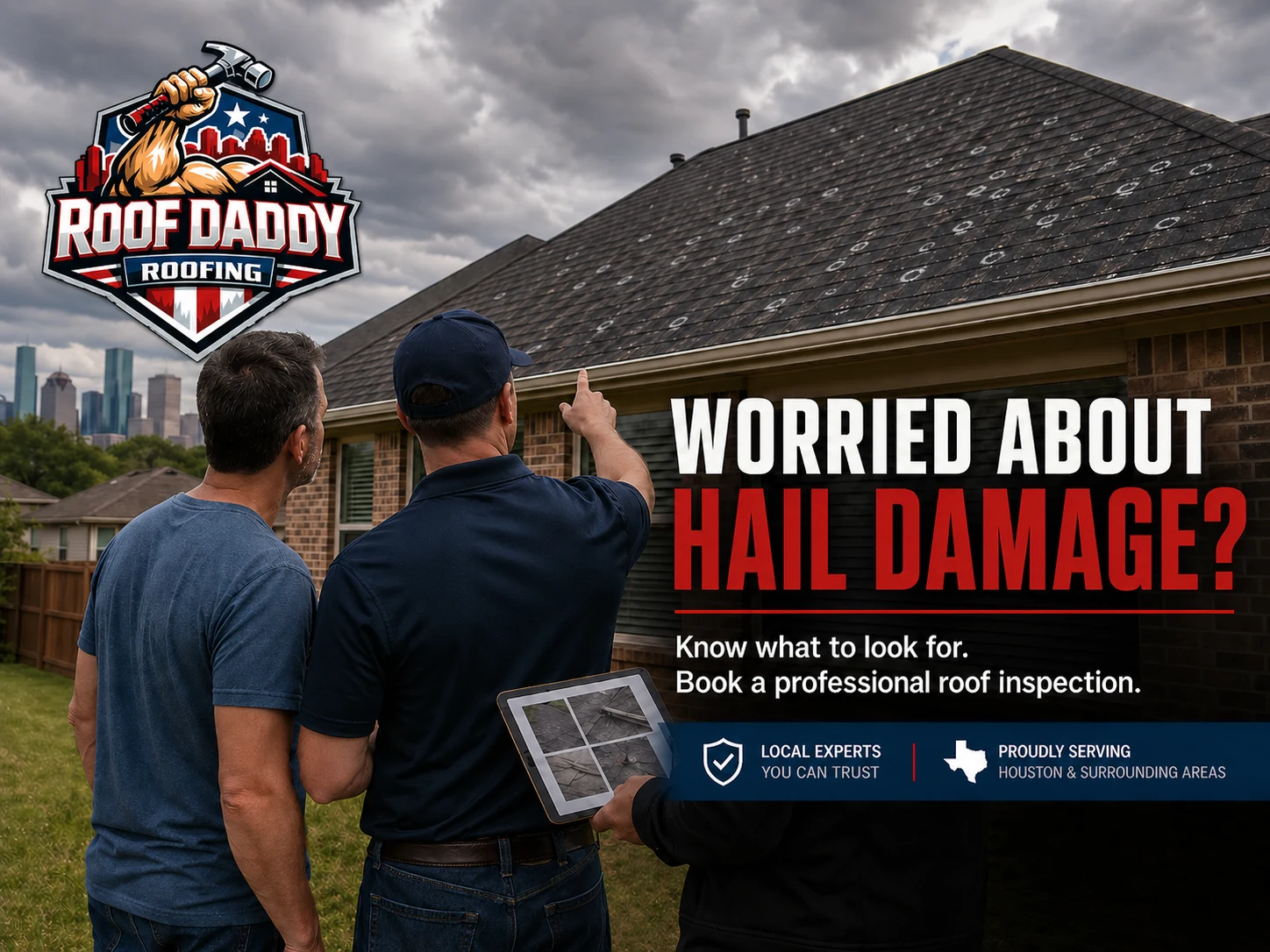
Do not climb on the roof yourself. Wet, hail-pocked shingles are slippery, and the structural integrity of older decking may be compromised in ways you cannot assess from a standing position on the surface.
Instead, do three things quickly. First, walk the perimeter and check the gutters, downspouts, and AC condenser for visible hail impact. These ground-level indicators confirm a significant hail event before an inspector arrives. Second, photograph a date-stamped weather report or radar capture for your area to establish the storm event timeline for your insurance claim. Third, schedule a professional storm damage inspection with a local contractor. Our team covers all of the Greater Houston area and can document findings while the damage evidence is still fresh and unambiguous for insurance purposes.
For everything you need to know about navigating repairs after hail, read our post on hail damage roof repair in Houston, which walks through the insurance claim and contractor selection process step by step.
Roofing Contractors in Houston TX You Can Count On



Roofing Contractors in Houston TX You Can Count On
Houston
Houston's trusted roofing experts. From storm damage repair to full roof replacements, we deliver professional roofing services built to handle the Gulf Coast climate across every Houston neighborhood.